Identity Solutions of the Future: Insights from UNITE 2026
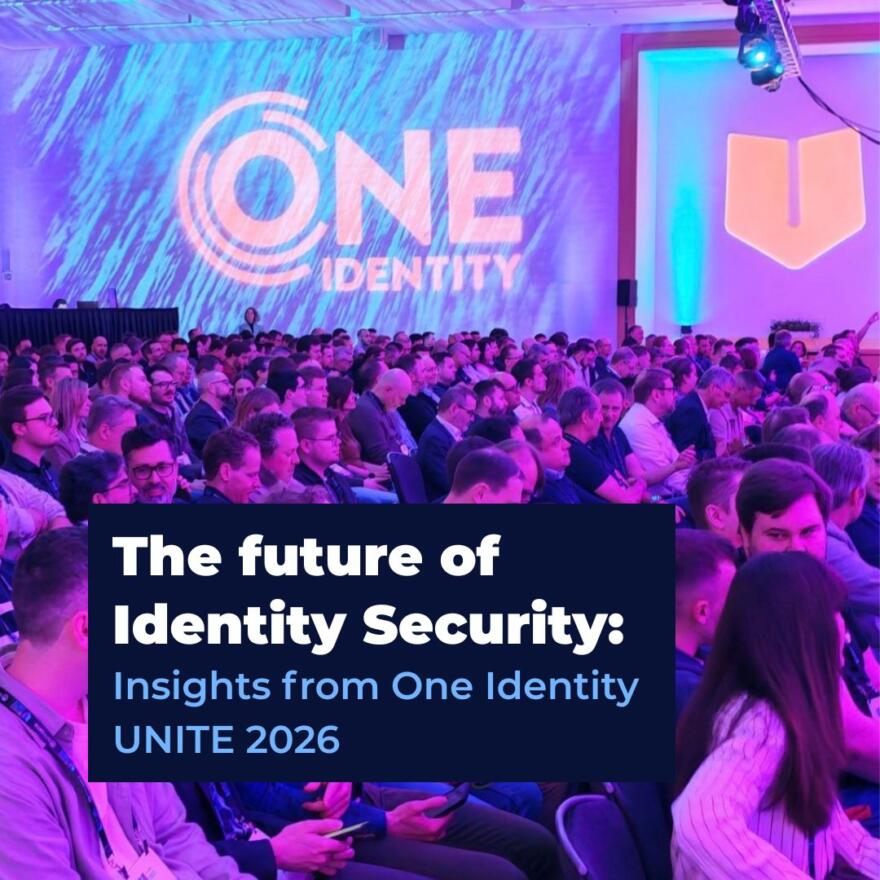
AI, automated systems, and stricter regulations are shifting identity from a technical function to a strategic security issue that impacts the entire organization
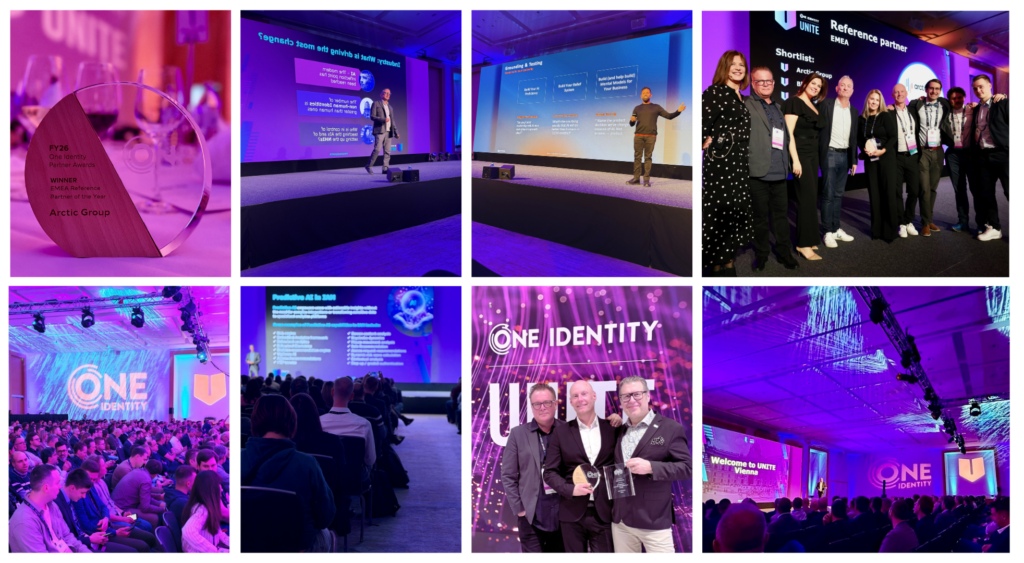
Last week, Arctic Group attended One Identity UNITE, an annual conference hosted by our product provider, One Identity, for their partners and customers. This year’s event in Vienna delivered a clear message: identity has evolved from being a technical function to becoming a strategic core concern for the entire organization.
Identity security is changing rapidly, driven by new technologies, an increasing number of digital services, and stricter regulatory requirements. More systems and automated processes are leveraging their own identities, AI-based tools are becoming more common, and regulations are tightening. Together, these developments make identity a central security issue for the entire organization.
Modern Identity Management requires an architecture that encompasses both human and system-based identities.
In today’s digital environment, many systems, integrations, and automated processes use their own identities, such as through API integrations and service accounts. In many organizations, these already outnumber human identities. This means that identity management can no longer focus solely on user accounts. It must also cover the identities used by systems and automated processes, as they often handle critical and business-essential functions.
Maintaining control requires clear ownership, structured approval workflows, active lifecycle management, and visibility into how access is created, used, and retired. Without these measures, organizations risk quickly losing control over one of their fastest-growing access surfaces
AI enhances identity security but must not replace decision-making.
AI plays a central role in the evolution of identity platforms. The technology gives organizations new opportunities to analyze behavior, identify risks, and optimize roles based on usage patterns. Generative AI also makes it possible to work with policies, processes, and workflows faster and more intuitively.
However, it is crucial that AI is used as a complement, not a foundation. Identity decisions must be transparent and fully justifiable, whether granting access or approving changes. Access cannot be based on probabilities—it must be governed by clear and verifiable rules. Therefore, AI should be used to strengthen analysis, improve efficiency, and detect risk patterns, while rule-based access logic remains traceable and governed by verifiable policies.
“AI can help us identify risks earlier and make better decisions faster, but access must still be governed by rules that are controlled and auditable. That’s where security is determined,” said Marcus Ström, Tech Lead at Arctic Group.
A modern identity platform must be as intuitive as it is secure.
One Identity’s Identity Manager platform is now entering a new phase, featuring a web-based user experience, improved navigation, and AI-driven guidance that helps users make the right choices from the start. This development is about making advanced identity models understandable, providing faster decision support, and reducing the risk of errors. With enhanced system insights and a clearer overview of the platform, the system becomes easier both to use and to manage.
This is particularly important in organizations where internal controls and external audits demand higher standards than ever before. The user experience thus becomes not just an interface, but a strategic tool.
Hybrid is the norm in Europe.
Few European organizations can, or want to choose exclusively between cloud or on-premises solutions. Requirements for data control, privacy, and operational stability mean that architectures must be flexible enough to support both. The modern direction is therefore clear: cloud-first, but not cloud-only. Isolated tenants, smoother deployment, and guided onboarding make it possible to modernize without compromising security or compliance
Regulatory requirements are driving identity investments.
NIS2 and DORA have made identity security a central part of corporate governance and risk management. The requirements are clear and concrete: access must be correct, justifiable, and traceable. This drives a new level of precision and transparency across all identity work, positioning modern identity platforms as tools for operational resilience rather than merely IT efficiency.
Take control of your identity security with us.
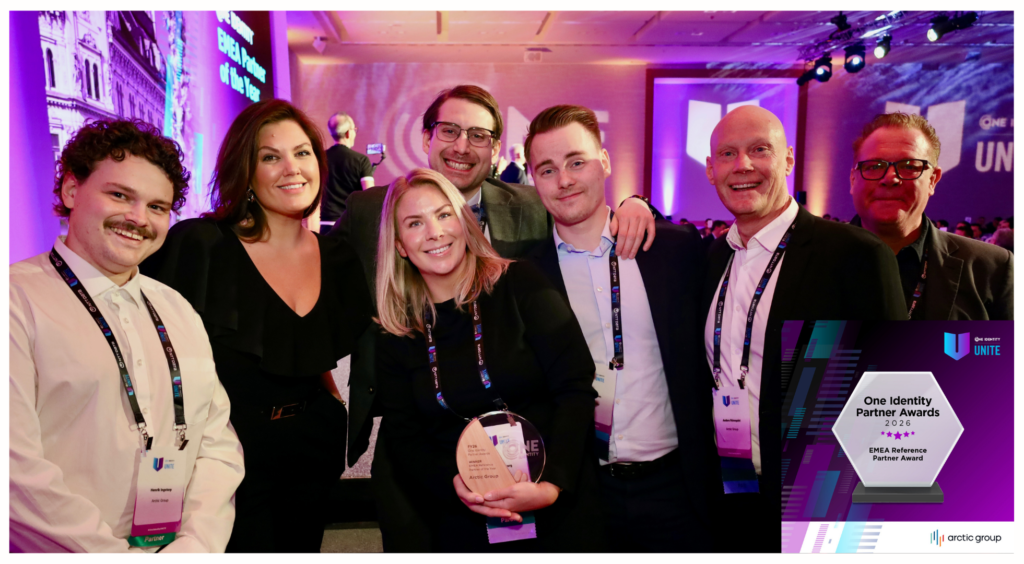
This year, Arctic Group participated not only as a sponsor of UNITE 2026 and the main sponsor of the Women in Cybersecurity lunch, but we also took the stage to receive the EMEA Reference Partner of the Year award.
This award is presented to the partner that best demonstrates trust, quality, and the ability to create real customer value
“Being named EMEA Reference Partner of the Year is more than an award. It’s a validation of our approach: that we work closely with our customers, maintain the highest quality in everything we do, and take long-term responsibility for driving the industry forward,” said Anders Rönnquist, CRO at Arctic Group.
The award confirms our role as a leading force in Identity Security and shows that our technical and strategic efforts make a real difference. This is not just recognition for us as a company, but proof of the shared direction we are building together with our customers and partners: an industry that is stronger, more inclusive, and better prepared for the future.
Today, identity is the most important control point in a modern organization. As the number of identities grows, AI makes systems more complex, and regulations become stricter, a robust, transparent, and cohesive identity architecture is essential.
We help you take control of identity security and lay the foundation for a safe, secure, and sustainable digital future. Take the next step by contacting us or downloading our guide on building a sustainable identity strategy here.